Festivals
Raksha Bandhan 2026: The Real Meaning Behind the Thread
By Yaad Team · 6 August 2026 · 4 min read
TL;DR
Raksha Bandhan is on Friday, 28 August 2026. The festival's meaning traces back to three stories — Draupadi and Krishna, Yama and Yamuna, and Rani Karnavati's letter to Humayun — all about a protective bond that isn't really about blood at all. Most people don't skip it on purpose; they just forget, because Hindu festival dates shift every year and nothing reminds them in time.
The real meaning behind the thread
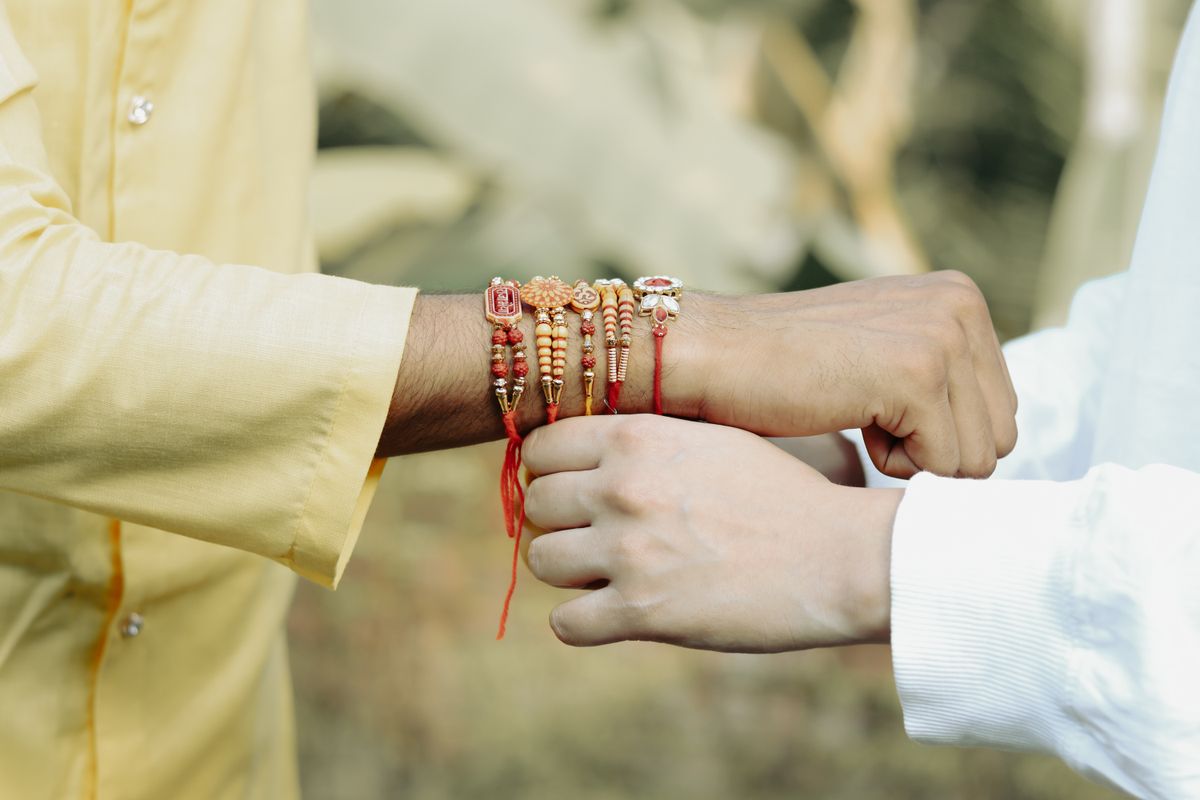
Raksha Bandhan means, literally, "the bond of protection." A sister ties a rakhi — a sacred thread — around her brother's wrist. He vows to protect her, for life, no matter where either of them ends up. It sounds simple. It is not simple at all, once you actually look at where it comes from.
The Mahabharata thread
The most-told origin story is about Draupadi and Krishna. During a battle, Krishna cut his finger. Draupadi, without thinking twice, tore a strip from her own saree and wrapped it around the wound. Krishna never forgot it. Years later, when Draupadi was publicly humiliated in the Kaurava court, it was Krishna who protected her — an unspoken debt, repaid. That's the emotional core Raksha Bandhan still carries: a small act of care, returned tenfold when it matters most.
Yama, Yamuna, and why brothers "have to" show up
A second, older story: Yamuna tied a rakhi on her brother Yama, the god of death, and prayed for his wellbeing. Moved, Yama granted her immortality and declared that any brother protected by his sister's rakhi would be safe from death that year. This is part of why, even today, showing up for a sister on Raksha Bandhan carries weight beyond a nice gesture — it's framed, mythologically, as a promise you don't skip.
A queen's letter across enemy lines
There's a historical version too, less mythical and more human. In the 16th century, Rani Karnavati of Mewar, facing an invasion, sent a rakhi to the Mughal emperor Humayun — a request for protection, sent to a man of a different faith and a rival kingdom. Humayun set out to help her. He arrived too late to stop the siege, but the story has outlasted the battle: Raksha Bandhan was never really about blood relation. It was about a bond someone chose to honor.
Why we keep forgetting anyway
None of that history is the problem. The problem is Tuesday.
You mean to call. You've meant to call for three years. Then a client meeting runs long, or the kids need picking up, or you're simply staring at a phone that didn't remind you the date existed until your cousin's Instagram story did. By the time you remember, it's 11 p.m., and "Happy Raksha Bandhan" sent a day late reads less like love and more like guilt.
This isn't a character flaw. It's what happens when the people who matter most compete for the same attention as everything else demanding it. A generic phone calendar treats Raksha Bandhan exactly like a dentist appointment — if you remember to add it at all, and most people don't, because Hindu festival dates shift every year against the Gregorian calendar and nobody's manually tracking Shravan Purnima.
How Yaad actually fixes this
This is the part where, yes, we tell you about our own app — because we built it for exactly this problem, not as an afterthought.
Yaad (याद — Hindi for "memory," "remembrance") tracks Indian festivals automatically, Raksha Bandhan included, so you don't have to remember the Hindu calendar shifts every year. A few days out, it nudges you. On the day, it hands you a heartfelt message already written — in Hindi, English, or Hinglish, whichever actually sounds like you — ready to send straight to WhatsApp, no blank-page moment required.
For siblings spread across cities or countries, Yaad's shared Family Circle means everyone in the family sees the same reminder, so it's never "I thought you were calling her." And because Shagun — the cash gift a brother traditionally sends back — is as much a part of Raksha Bandhan as the thread itself, Yaad lets you send it directly over UPI, no separate app, no "I'll transfer it later" that never happens.
None of this replaces actually calling your sister. It just makes sure you remember to.
When is Raksha Bandhan in 2026?
Raksha Bandhan falls on the full moon (Purnima) of the Hindu month of Shravan, which is why the Gregorian date moves every year. In 2026, Raksha Bandhan is on Friday, 28 August.
The thread is small. The point never was.
A rakhi costs less than a cup of chai. What it's actually asking of you is five minutes of your attention, once a year, for someone who almost certainly gave you more than that when you needed it. The thread isn't the point. Remembering is.
Frequently Asked Questions
When is Raksha Bandhan in 2026?
Raksha Bandhan 2026 falls on Friday, 28 August. It's celebrated on the full moon (Purnima) of the Hindu month of Shravan, so the Gregorian date shifts every year.
What is the story behind Raksha Bandhan?
There are three well-known origin stories: Draupadi tying a torn piece of her saree on Krishna's cut finger, in return for his protection; Yamuna tying a rakhi on her brother Yama, the god of death, who granted her immortality; and Rani Karnavati of Mewar sending a rakhi to Mughal emperor Humayun asking for protection against invasion.
Is Raksha Bandhan only for brothers and sisters?
Traditionally yes, but today it's widely celebrated between all siblings, cousins, and close friends who consider each other family — the thread symbolizes a protective bond, not strictly a blood relation.
What is Shagun on Raksha Bandhan?
Shagun is the customary gift, often cash, that a brother gives his sister after she ties the rakhi — a way of returning her care and blessing. Apps like Yaad let you send Shagun directly via UPI alongside your wishes.
How can I make sure I don't forget Raksha Bandhan?
Since Raksha Bandhan's date changes every year with the Hindu calendar, a plain phone calendar reminder often gets missed or added too late. A festival-aware app like Yaad tracks the date automatically and reminds you a few days ahead, with a ready-to-send WhatsApp message in Hindi, English or Hinglish.
